


Please Leave Us A Message
Privacy statement: Your privacy is very important to Us. Our company promises not to disclose your personal information to any external company with out your explicit permission.
 Anhui Hangong Machinery Technology Co., Ltd.
Most webbing workshops grow the same way: one loom, a stack of beams bought whenever a job demanded one, and a packing bench that doubles as the quality department. Orders come in, the loom runs hot, and the natural instinct is to buy a second loom.
That instinct costs money. In shops we visit before an expansion, the second loom is usually the third-best investment on the list — behind fixing the warp supply and behind a proper winding station. This article walks through the upgrade order that pays back fastest, and the signals that tell you when each step is due.
Spend two weeks logging every stoppage by cause: beam change, warp break, roll doff, mechanical fault, no order. The distribution is rarely what owners expect. A typical single-loom shop running 1,400 picks per minute loses more hours to beam changes and warp breaks than to the loom itself.
One number makes the case for upstream investment: changeover time. If a beam swap takes 40 minutes and happens six times a day, the loom idles four hours daily — a third of a shift — before any mechanical problem is counted. Breaks clustered in the first hour after a change point at the same root cause: beams wound by hand, or outsourced, with tension that drifts across the width.
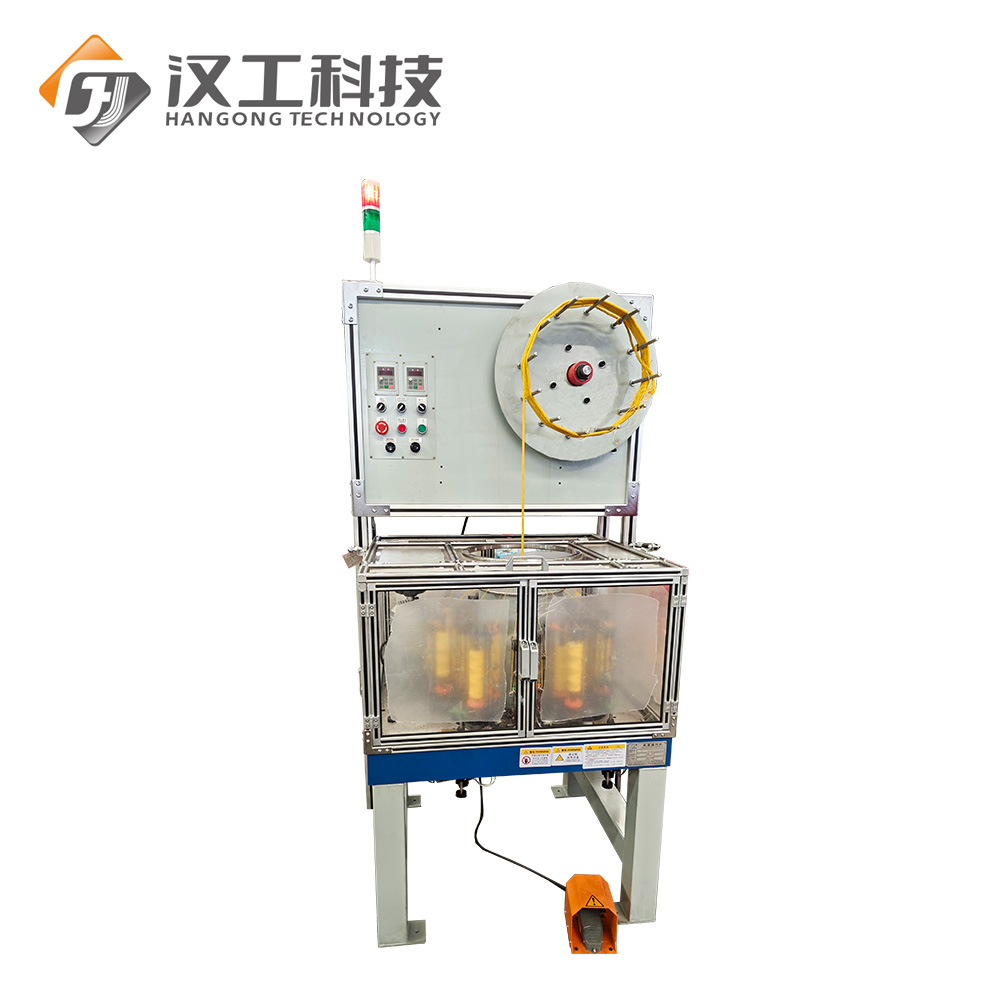
The cheapest fix is a Warping Machine that delivers beams ready to mount: tension held within a narrow band end to end, length counted to a fraction of a percent, and broken ends caught at the creel instead of at the loom. Shops that bring this stage in-house routinely cut changeover loss by half and lift loom efficiency 15–25% — output gained for a fraction of what a second loom costs, without hiring a second operator.
The second investment targets claims, not output. Narrow fabric is wound, packed and shipped before most defects are visible; a slub or a thin section inside a roll surfaces only when the customer cuts it, and by then you are paying freight both ways plus the replacement run.
A Rewinding Machine turns the packing bench into a real inspection gate. As tape is re-rolled to shipping diameter, the operator — or the sensors — catch slubs, count metres exactly, and mark splices so downstream processes know where they are. For customers in automotive or safety-critical webbing, certified roll lengths with traceable splice marks are close to a purchase requirement; without them, audits fail on paperwork rather than on tape quality.
The financial signal here is different from the first one. Watch claims and re-runs, not loom efficiency. If returns or customer deductions have appeared more than twice in a quarter, the winding station is paying for itself before it is bought.
Only when the first two stations hold steady does a second loom earn its place. The three signals to watch together: loom efficiency stabilised above 85% for a month, no queue in front of the warper or the winder, and order books running six weeks or more ahead of capacity.
When that point arrives, resist buying a copy of the machine you already run. Two identical heads compete for the same tape orders and the same beam sizes. A better pattern is to complement: if the first loom covers narrow multi-tape work, add a Ribbon Weaving Machine sized for wider single-tape jobs, or vice versa. The line then covers a wider quote sheet instead of doubling one corner of it, and each beam format gets its own supply.
One caution before the second loom is ordered: a multi-head loom amplifies whatever the warp supply still lacks. One broken end stops every tape on the beam, so an unstable upstream stage that cost 10% output on a single head will cost far more across twenty. That is why the sequence above is an order, not a menu.
| Question | Pass condition | Red flag |
|---|---|---|
| Is the bottleneck measured? | Two weeks of stoppage logs by cause | Buying from habit or from a sales visit |
| Will the new station run? | Predicted utilisation above 60% | Equipment idle while the loom sets the pace |
| Does it pay back inside 18 months? | Output gain or claim reduction × margin ÷ price | Payback modelled only at rated speed |
Can we skip the upstream step and buy the loom first?
Physically, yes. Economically, usually no. A second loom inherits the same beam supply, so changeover losses double while the root cause stays. Most shops recover the cost of in-house beam preparation within a year from efficiency alone, then buy the loom from a stronger position.
Is second-hand roll handling worth considering?
Only with the same measurement checks you would apply to a new one: length counter accuracy, tension control type and spare-part availability. Older friction-tension winders often cannot hold constant tension as diameter grows, which reintroduces the curl and telescoping problems the upgrade was meant to solve.
What if capital only covers one purchase this year?
Follow the order. Fix the warp supply first — it lifts every metre the loom produces. Add the winding station when claims start to cost real money. The second loom follows when both are quiet.
Scaling a webbing line is a sequence, not a shopping list. Measure where hours and claims actually go, fix the warp supply, make the winding bench an inspection gate, and only then add weaving capacity — sized to widen what you can quote, not to duplicate what you already run.
Hangong supplies the full sequence in-house, from beam preparation and winding stations through to multi-head and wide-format looms, and will size each station against the one before it. Bring your stoppage logs and your last quarter of claims, and we will tell you honestly which purchase comes first.
Email to this supplier
Privacy statement: Your privacy is very important to Us. Our company promises not to disclose your personal information to any external company with out your explicit permission.
Fill in more information so that we can get in touch with you faster
Privacy statement: Your privacy is very important to Us. Our company promises not to disclose your personal information to any external company with out your explicit permission.